Sunday, April 22, 2012

ENGINEER'S SWEATER


The sweater is made for Volodia, electronic engineer from Toronto - Canada. We met with him and his wife Irina at our first job at the research institute of TV technologies. We worked at the same lab, and shortly we became close friends. Much water has flown under the bridge since that time, I’m not an engineer anymore, but he is, and a very good one :-).


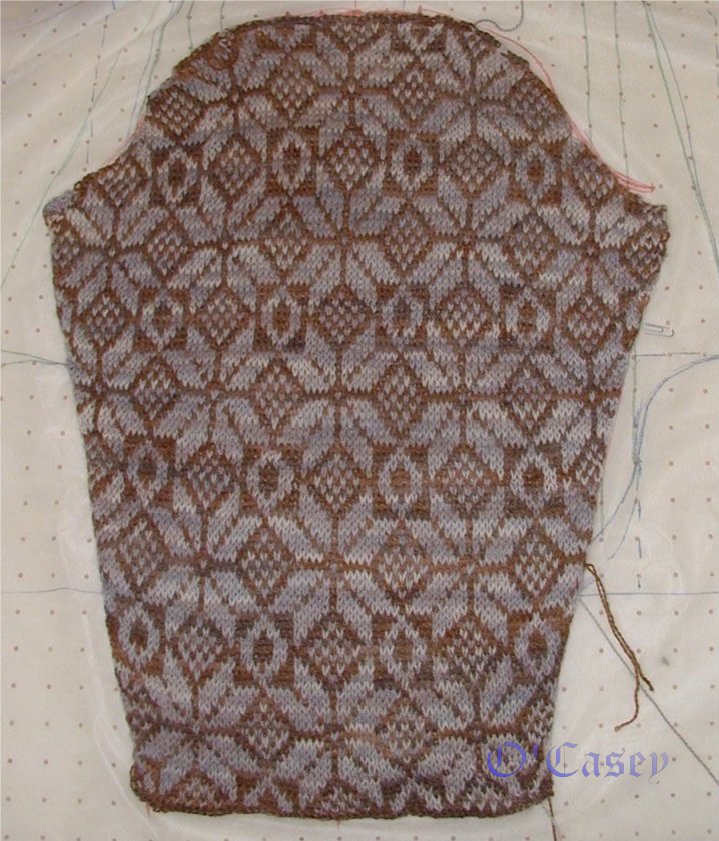
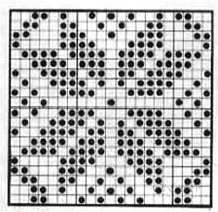
I wanted this sweater to look like their soft-colored calico cat Sonia (this is their second calico. The first one, Basia, whom I introduced to them about… OMG… 20 years ago, was adorable too but quite different. We will always remember her). By coincidence, when I asked him what colors he preferred he listed all the Sonia’s colors. So, the color part was easy, and I used “Flowers” from Flowers sweater  - just because I knew that color sequence by heart and didn’t want to make life more complicated than it was.


What about the design of the “Engineer’s Sweater”? Something modular… unusual… multidirectional… very smart… never seen before… probably worth patenting :-)… NO. Intermingling variegated colors of both yarns produce very interesting effects, which I started to like still at the stage of the swatches. That is why I decided to make the sweater extremely simple - no design at all. But 2-color knitting all over the body (except for the ribbings) and fingering weight yarn made it the most labor consuming thing I have ever made. And I enjoyed every minute of this slow work, admiring this beautiful fabric growing in my hands, this luxurious blend of colors… To add even more chic I finished all the ribbings with Italian cast-off.


Materials: Knitpicks' Imagination hand-painted sock yarn (50% Merino Wool, 25% Superfine Alpaca, 25% Nylon; 219 yards/50 gram): 5 hanks of “Sasquatch” (darker color) and 4 hanks of “Castle Walls” (lighter color).

Needles no.4, circular needle no.4, several small safety pins, 1 large safety pin (stitch holder), and a darning needle for Italian binding-off.

Gauge: 4” (10 cm) of 2-color knitting = 23.5 sts.


Note about selvage stitches (ss): Always slip the first stitch in the beginning of each row and purl the last stitch in the end of each row. In such a way you will have a chain of selvage stitches, - one vertical loop for each 2 rows - on each side of a knitted piece.

Back


Cast on 143 sts (7 flowers + 2selvage stitches) and follow the color scheme. Work without any changes 39 selvage stitches (ss.) up.

(Right side): For the armholes bind off in the beginning of every row 5 sts – 1 time, 4 sts – 1 time, 3 sts – 1 time, 2 st – 2 times, 1 sts 2 times (107 sts on the needle now). Mark the last selvage stitches at both sides with safety pins.

Work without any changes 15 ss. (30 rows) up.

(Right side): To shape the shoulder and the neckline, bind off 10 sts, work 13 sts, bind off 61 sts (neckline), work 23 ss.

In the next row (wrong side) bind off 10 sts in the beginning of the row, work 13 sts.

In the next row bind off 3 sts in the beginning of the row, work to the end of the row.

In the next row bind off all the sts.

In the same way finish the opposite side of the piece.

Front

Cast on 143 sts (7 flowers + 2selvage stitches) and follow the color scheme. Work without any changes 39 selvage stitches (ss.) up.

(Right side): For the armholes, exactly like for the back piece, bind off in the beginning of every row 5 sts – 1 time, 4 sts – 1 time, 3 sts – 1 time, 2 st – 2 times, 1 sts 2 times (107 sts on the needle are left). Mark the last selvage stitches at both sides with safety pins.

*********************************************

At the same time, shape the V-neck: after binding off 4 stitches from both sides for the armholes, mark the center stitch with a safety pin. This will be our front center stitch FCS.

In the right side row work until the FCS, let it slip to a small safety pin, then knit 3 with dark yarn, knit 2 together and continue with both yarn to the end of the row. Turn.

In the next row (wrong side) work with 2 yarns until you see 5 sts before the FCT, and with dark yarn only purl 2 together and purl 3. Slip the left half of the front piece to the large safety pin (stitch holder), it will be finished later the same way as the right side.

Continue with the left half only. Along the V neck line work as follows:

1. Don’t make selvage stitches along the neckline by slipping the first stitch from the left to the right needle because it makes the knitted fabric a little tight at the edge; but continue to make ss on the other side, along the arm openings;

2. Make decreases in each row (wrong and right side) at the same place (3 sts away from the edge) until the piece equals 20 sts; then work straight.

3. 3 edge sts and the decrease (2 together) of the V-neckline are supposed to be made with dark yarn only all the time. When piece equals 20 sts, 3 edge sts and the next one will be made with dark yarn only to frame the neckline evenly.

***********************************************End of V-neckline description.

Work without any changes 15 ss. (30 rows) up from the marked ss. To shape the shoulder, work exactly like with the back piece: in the wrong row bind off 10 sts, and work to the end of the row. Then turn, work to the end of the row. Bind off all the stitches.

The right side of the front piece is finished. Replace the large safety pin with a needle, and make the right half exactly the same way.

Note: The lines of decreases along the V-neckline should look nice and symmetrical; this is the most visible part that attracts attention. We all use different techniques for purl and knit stitches (American, continental, semi-continental, etc.), so make sure you use the right techniques to make these lines pretty.

When finished, spread the back and front and lightly iron the right sides through a wet cotton cloth, without pressing. Let them rest until totally dry. 2 pictures to compare the knitted fabric before and after ironing:

Before ironing
After ironing

Sleeve

 Cast on 63 sts (61 sts for 3 flowers+2 ss) and work increasing 1 stitch each side on every 3rd row until 107 sts are on the needle. Continue to work without increasing until the piece is 39 ss long (78 rows). Bind off in the beginning of every row 5 sts 1 time, 4 sts 1 time, 3 st 1 time, 2 sts 2 times, 1stitch 3 times, 2 sts 1 times, 3 sts 1 time, 4 sts 2 times, and 5 sts 2 times. Bind all the stitches off, mark the center stitch.

Lightly iron the sleeves as the back and the front.


V-neck ribbing

 First of all shoulder seams should be finished with mattress stitch.

With a circular needle, starting at the left shoulder seam on the right side of the sweater cast 45 stitches from the seam till the front center stitch (FCS), slip FCS to the right needle but don’t remove the pin, cast 45 stitches from FCP to the right shoulder seam, and 45 sts on the back between the shoulder seams. When casting on, don’t pull the yarn through the edge stitch but through the next one, this looks better. Turn (I didn’t make the V-neck trim seamless).

(Wrong side) *Insert the right needle into the base of the stitch that is on the left needle and pull the yarn through it, casting on a stitch, then slip the existing stitch, which was made in the previous row, purl-wise from the left to the right hand needle, keeping yarn before the stitch*. Continue from * to * until all the stitches from the left needle are doubled in this way. Don’t double FCS, just slip it from the left to the right needle.

(Right side) Knit all the knit stitches (i.e. stitches that were casted on in the first row) and slip purl-wise all the stitches made in the previous row from the left to the right hand needle, keeping the yarn before the stitch. Special treatment for FCS:

1. In each right side row stop 2 stitches before FCS;

2. Change the order of the stitches on the left hand needle so that FCS is on the first place;

3. Slip FCS from the left to the right needle;

4. Knit 4 together;

5. Slip FCS through the obtained stitch.

Make 3 more rows in the same way, forming “hollow ribbing”. Slip FCS from the right to the left in the wrong side rows and treat it as described above in the right side rows.

Then in the right side row work as follows: *1 k, 1 k, 2 k together* to the end of the row.

Then work 8-9 rows of 2x2 ribbing, making selvage stitches by slipping the first stitch of each row from the left to the right needle and purling the last stitch of each row. Make sure that if you started with ss and 2 k, the last stitches of the row are 2 p and ss. If it is not so, make or decrease a couple of stitches. In this way the seam on the V-neck ribbing, which we will make later, will be invisible.

Then work a row of 1x1 ribbing. If your first 2 stitches are k, make the transition as follow: 1k, *switch the order of the next 2 stitches on the left hand needle, 1p, 1k, 1p, 1k* to the end of the row. If your first 2 stitches are p, make the transition as follow: 1p, *switch the order of the next 2 stitches on the left hand needle, 1k, 1p, 1k, 1p* to the end of the row.

Then work 4 rows of the “hollow ribbing” and make Italian cast off with a darning needle (see lots of videos on youtube).

Stitch together the short sides of the V-neck ribbing at the left shoulder.

Armhole ribbing

Exactly like for the V-neck, but cast on 88 sts along the armhole. And we don’t have a center stitch to take special care of!

Bottom sleeve ribbing

At the bottom of the sleeve cast on 42 sts and work 20 rows 2 x 2 ribbing. Then make a transition to 1 x 1 ribbing, 4 rows of “hollow ribbing”, and bind off with the darning needle as described above.

Bottom front ribbing

at the bottom of the front piece cast on 106 sts and work 20 rows 2 x 2 ribbing. Then make a transition to 1 x 1 ribbing, 4 rows of “hollow ribbing”, and bind off with the darning needle as described above.
Bottom back ribbing - exactly like for the front.


Assembly

Finish the side seams on the sweater and on the sleeves. Insert sleeves in the armholes. The free edge of the ribbed trim should rest loosely on the sleeve.


On me
With Sonia

Wednesday, March 21, 2012

Od-Op Top


Will introduce here something absolutely different from “12 Men’s Character Sweaters”. Those 3 remaining men’s sweaters will be posted soon (2 of them are almost ready), but today we will celebrate the springtime :-)

With this Od-Op Top I’m starting "12 Nautical Tops for 12 Pretty Girls".This project will be a tribute to my Daddy. I think he would love the idea!  Although he retired from the navy service in 60s, he always loved the sea and everything associated with it. He owned a lot of nautical uniform undershirts and proudly wore them from time to time.

Od-Op Top is inspired by the warm summer atmosphere of Odessa Opera House located by the Black Sea maritime port. Anja is wearing it with a silver necklace pinned as a brooch.

Yarn: Elann Esprit (98.3% cotton/1.7% elastic). Colors: French Navy + Natural.

2 balls of each for size XS and S, 3 balls of each for size M and L.

Needles: #4 (3.5 mm) and a crochet hook #3 if the straps are to be crocheted.

Gauge: 20 sts = 4” (10 cm) on stockinet

Sizes: XS-S-M-L

Schematics with measurements:


Note: all the measurements are provided for a non-stretched piece that is why the piece is much smaller than the dimensions or the top when worn. Front and back pieces are identical. Straps are about 16” long, open work trimming band is 20” long.


Main Stitch pattern:

Start with navy color. 4 rows in 3x2 rib. Switch to natural color, 1row - all k, 3 rows of 3x2 rib. Switch to navy, 1 row – all k, switch to natural, etc. When switching a color, always knit 1 row to get solid stripes.

Lace pattern:

yo – yarn over

k2tog – knit 2 together

Cast on 13 sts. Rows 1 – 16:

Row 1 (Right Side): slip 1 purlwise, k6, yo, k2tog, k2, yo, k2.
Row 2 and all even rows: yo, k2tog, all k till the end of the row
Row 3: slip 1 purlwise, k5, [yo, k2tog] 2 times, k2, yo, k2.
Row 5: slip 1 purlwise, k6, [yo, k2tog] 2 times, k2, yo, k2.
Row 7: slip 1 purlwise, k7, [yo, k2tog] 2 times, k2, yo, k2.
Row 9: slip 1 purlwise, k5, [k2tog, yo] 2 times, k2, k2tog, yo, k2tog, k1.
Row 11: slip 1 purlwise, k4, [k2tog, yo] 2 times, k2, k2tog, yo, k2tog, k1.
Row 13: slip 1 purlwise, k5, k2tog, yo, k2, k2tog, yo, k2tog, k1.
Row 15: slip 1 purlwise, k4, k2tog, yo, k2, k2tog, yo, k2tog, k1.

Swatch

Back and Front (identical): Cast on 67-77-92-117 sts (65-75-90-115 sts + 2 selvage stitches) and work straight 28 rows (7 strips).

In the 3rd row of the 8th stripe decrease evenly 7-8-9-11 sts (right side row: 1 ss, *k2tog, 1k, 2 p, 3k, 2p*, repeat *…* to the end of the row).

Work straight 5 more stripes (9th through 13th), then in the 3rd row of the 14th stripe decrease evenly 6-7-9-10 sts by switching completely to 2x2 ribbing.

Work straight 13 stripes (15th through 27th), then in the 3rd row of the 28th stripe add evenly 7-8-9-11 sts in the same spots where the first decreases were made.

Work straight 2-3-6-13 stripes and cast off. Make 1 more piece.

(Note about selvage stitches (ss): Always slip the first stitch purlwise (with yarn in back) in the beginning of each row and purl the last stitch in the end of each row.).

Lace trimming band: cast on 13 sts and repeat the lace pattern (all 16 rows) 13-14-16-18 times.

Knit (I-cord) or crochet the straps (approximately 16’/40 cm each), or use 1 yard of purchased ribbon.

Assembly: assemble side seams of the bodice and the trimming band using mattress stitch. Pin together upper edges of the trimming and the bodice (right side of the bodice to the wrong side of the trimming). Attach the trimming easing in as appropriate; attach the straps making necessary adjustment. Loosely sew on the tips of the trimming corners to the bodice, otherwise they will stick out. Decorate with a brooch or a corsage flower.


Tuesday, August 9, 2011

HETMAN !


Another experiment with ethnic style. Large and heavy but very easy to knit – this is a vest for Yura, husband of my cousin Anichka (Kostik's father). He is a philologist and an expert in Ukrainian language, culture and history.

Materials:

9 balls of Elann Peruvian Highland Chunky (100% wool), color – Light Grey Heather, each ball 50 g /1.75 ounces – 70 yards;

5 balls of the same Peruvian Highland Chunky, color – Mid Indigo;

2 balls of Peruvian Hingland Chunky, color – Charcoal Heather.

1 ball Lion Brand Microspoon (micro-fiber acrylic 100%), 2.50 oz./70 g - 168 yd/154 m, color – black; for Kitchener cords;

Needles # 10 / 6 mm (or size to obtain gauge);

Smaller needles # 4 / 3.5 mm;

Sewing needle; Crochet hook # 3.

Gauge - 13 stitches in 10 cm/4” worked on garter stitch with needles # 10.

Size – L-XL.

As Yura’s appearance speaks for itself, I wanted this vest to be very simple, with little picturesque details: the front of is made with angle knitting (2 pieces), the back is absolutely ordinary 1 piece, and only garter stitch is used all over the vest. The front is decorated with sewn on cords made of black Microspoon yarn. Simple frog closures.


Note about selvage stitches (ss): Always slip the first stitch in the beginning of each row and purl the last stitch in the end of each row. In such a way you will have a chain of selvage stitches, - one vertical loop for each 2 rows - on each side of a knitted piece. I usually don’t count rows, I count selvage stitches. Another advantage – they look very nice when assembled by mattress stitch.

LEFT FRONT

With Charcoal Heather yarn cast on 124 sts (40 sts – horizontal side, 1 central stitch (mark it with color yarn, on both sides of this stitch we will decrease stitches in every right side row; that will create an angle), and 83 sts of vertical side).

1st row (right side): 1ss (selvage stitch), 37 k., 2k together, 1 k. (central st), 2k together, 80 k., 1 ss.

2nd row (wrong side): 1 ss, 38 k., 1 p. (central stitch), 81 p., 1 ss.

Change color to Indigo and knit 8 more rows decreasing 1 stitch on both sides of the marked central stitch (like in the row 1).

Change color to Charcoal Heather (2 rows will be knitted). Beginning with this row, we start to shape the neckline. Add in the beginning of the next wrong row 1 stitch.

Change color to Indigo and knit 8 more rows. At the same time add 1 stitch in the beginning of 4, 6 and 8 Indigo rows.

Change color to Charcoal Heather and knit 2 rows, casting on in the beginning of the wrong side row 2 stitches.

Change color to Light Grey Heather and cast on 2 stitches in the beginning of 2nd and 3 stitches in the beginning of the 4th Light Grey Heather row. End of neckline shaping.

Continue with Light Grey Heather only, work 6” (15 cm) after the neckline shaping and start armhole shaping: in the beginning of the wrong side row cast off 30 stitches. Then in the beginning of the next wrong rows cast off 2 sts 2 times, 1 st 2 times, work 2 rows straight and bind off.

Make the right half symmetrical to the left one.


BACK

Cast on 80 sts with Charcoal Heather color and work straight 55 ss (110 rows) as following: 1 row – Charcoal Heather, 8 rows Indigo, 2 rows – Charcoal Heather, 8 rows –Indigo, 2 rows – Charcoal Heather, and the rest - Light Grey yarn. Bind off in the beginning of every row 3 sts 1 time, 2 sts 1 time, 1 st 2 times for the armholes.

Work straight 28 ss (56 rows) and begin the back neckline shaping: Work 38 sts, bind off 20 sts and work 38 sts to the end of the row. Continue to work on both parts separately: in the end of the next row decrease 1 st, in the beginning of the next row bind off 5 sts, in the next row bind off all the rest. Work the opposite side symmetrically.


ASSEMBLING AND TRIMMING

Sew only shoulder seams.

Neckline trimming:

With Charcoal Heather cast on 90 sts around the neckline on the right side and work one row (wrong side).

Switch to Indigo color (10 rows): work 2 rows, change needles to the smaller size and work straight 6 more rows. In the next Indigo row work 4 k, 2 k together to the end of the row and work one more Indigo Row.

Switch color to Charcoal Heather and work 2 row straight, then in the third row work *2 k together, 1 yo (yarn over needle)* to the end of the row to obtain a row of holes. Work one more row.

Switch color to Indigo. Work 2 rows. In the third row repeat *4 k, make one* to the end of the row. Work 5 more rows straight. Change needles to the larger size and work 4 more rows straight. Bind off, fold to the wrong side and sew on.

Cords.

For one frog closure make 2 Kitchener cords using black Microspoon yarn and smaller size needles: one 130, another - 110 rows long. Make a node in the middle of the longer one (see the picture).

With cotton color tread mark where 3-5 frog closures will be sewn on (I made just 3). Pin one cord at a time to the front of the vest using a stoarfoam board, baste with the same yarn that was used to make the cord, unpin and meticulously sew on in hands.


With cotton color thread mark a square on the bottom of the front. Inside the square mark the pattern. Make 4 pieces of Kitchener cord for each half-front and pin and sew them on one piece at a time – exactly like for the frog closure. Hide securely all the yarn tails in the cord tubes using a crochet hook.


It is better to sew on the cords right after the neckline is done and before assembling the whole vest.

Armhole trimming:

With Charcoal Heather cast on 90 sts around the armhole and work exactly the same trimming as for the neckline. Assemble side seams before folding and sewing the trims to the wrong side.

THE END.


Wednesday, July 6, 2011

FLOWERS


A sweater for Valery. He is a Chef cook, flower whisperer, and husband of my dear cousin Lidochka. Everyone who knows him loves him, everything he cooks is delicious and beautiful, everything he fixes works and runs, everything he plants grows fast and thrives :-)


More than 10 years ago I was impressed with an elegant Italian multicolored sweater with flower patterns, which looked however very masculine. Back then I decided to play one day with this idea, but did it only now.

Materials:

10 balls of Stroll Sport Yarn Sport from KnitPicks (75% superwash merino wool, 25% nylon) color – Baltic Heather, each ball 50 g /1.75 ounces – 137 yards.

5 balls of Felici Sport Self Striping yarn from KnitPicks (superwash merino wool, 25% nylon), color – Boutique, each ball 50 g /1.75 ounces – 164 yards.

Needles # 4 / 3.5 mm (or size to obtain gauge).

Smaller needles # 3 /3 mm (for ribbing).

Sewing needle.

Gauge - 22 stitches in 10 cm/4” worked on simple knit (fair isle).

Size – M-L


The body of the sweater is made of one front central panel and one back central panel (they differ only by neckline shape) worked in fair isle 1; 2 very long symmetrically knitted side panels with cables (no shoulder seams); and 2 identical small under-arm panels worked in faie isle 2.

The sleeves consist of 4 details each: a central panel worked in fair isle 1; 2 sleeve braids; and an under-arm sleeve panel worked in fair isle 2. Fair isle and cords have different vertical gauge that is why they are worked separately.

Fair Isle 1:                                                                              Fair Isle 2:


 Cable panel:


STITCH PATTERN cable panel:

Stitch Key


Stockinet Stitch: Knit 1 (k) on right side rows, purl 1 (p) on wrong side rows.

Reverse Stockinet Stitch: Purl 1 on right side rows, knit 1 on wrong side rows.

c6b: Slip next 3 stitches onto cable needle, hold at back of work. Knit 3, knit the stitches on the cable needle.

c6f: Slip next 3 stitches onto cable needle, hold at front of work. Knit 3, knit the stitches on the cable needle.

t2b: Slip next stitch onto cable needle, hold at back of work. Knit the next stitch, purl the stitch on the cable needle.

t2f: Slip next stitch onto cable needle, hold at front of work. Purl 1, knit the stitch on the cable needle.

c2b: Slip next stitch onto cable needle, hold at back of work. Knit the next stitch, knit the stitch from the cable needle.

c2f: Slip next stitch onto cable needle, hold at front of work. Knit 1, knit the stitch on the cable needle.


Row 1 (Right Side): k9, p1, k1, [p2, k2] 2 times, p2, k1, p1, k9.

Row 2 (Wrong Side): p9, k1, p1, [k2, p2] 2 times, k2, p1, k1, p9.

Row 3: k3, c6b, p1, k1, [p2, c2b] 2 times, p2, k1, p1, k3, c6b.

Row 4: p9, k1, p1, [k2, p2] 2 times, k2, p1, k1, p9.

Row 5: c6f, k3, p1, [t2f, t2b] 3 times, p1, c6f, k3.

Row 6: p9, [k2, p2] 3 times, k2, p9.

Row 7: k3, c6b, [p2, c2f] 3 times, p2, k3, c6b.

Row 8: p9, [k2, p2] 3 times, k2, p9.

Row 9: c6f, k3, p1, [t2b, t2f] 3 times, p1, c6f, k3.

Row 10: p9, k1, p1, [k2, p2] 2 times, k2, p1, k1, p9.

Repeat rows 3-10.


Note about selvage stitches (ss): Always slip the first stitch in the beginning of each row and purl the last stitch in the end of each row. In such a way you will have a chain of selvage stitches, - one vertical loop for each 2 rows - on each side of a knitted piece. I usually don’t count rows, I count selvage stitches. Another advantage – they look very nice when assembled by mattress stitch.


FRONT CENTRAL PANEL

Cast on 63 sts. and work straight 61 ss (122 rows), fair isle 1. Then shape the neckline: in the right side row work 18 sts, bind off 27 sts, and work 18 sts to the end of the row. Turn and work to the end of the wrong side row. Then bind off in the beginning of every right side row 3, 2, 1, 1, 1, 0 sts, and bind off the remaining 10 sts making sure that total length of the Front Central Panel = 67 ss (134 rows). In the same way finish the opposite side of piece.


BACK CENTRAL PANEL

Cast on 63 sts. And work straight 65 ss (130 rows), fair isle 1. Then in the right side row work 18 sts, bind off 27 sts, and work 18 sts to the end of the row. Turn and work to the end of the wrong side row. Then bind off in the beginning of the right side row 8 sts, and bind off the remaining 10 sts making sure that total length of the Front Central Panel = 67 ss (134 rows). In the same way finish the opposite side of piece.

LEFT SIDE PANEL

Cast on 34 sts. Initial row: 1 st – selvage stitch (ss), 9 sts – braid, 1p, 1k, 2p, 2k, 2p, 2k, 2p, 1k, 1p, 9 sts – braid, 1 ss.

Work 66 ss and mark both selvage stitches with safety pins. Then start working short rows so that outer edge of the panel remains the same 66 ss, but the inner edge is longer to match the center pieces. So, in the wrong side row work 23 sts, the 24th will be our turning point. Take yarn to the wrong side of the fabric and slip the turning point stitch from left to right needle; take yarn to the front side of the fabric and turn work. The yarn is wrapped around the turning point. Always slip the turning point stitch in the right side row from left to right needle. It was the first short row. Make 4 more wrong side short rows. Mark the last selvage stitch on the inner side of the panel with a safety pin.

Continue to work straight – 66 more ss, bind off.

The Right Side panel is worked as mirrored left side panel: work a piece 66 ss long, then in the right side row work 23 sts, the 24th will be our turning point. Take yarn to the wrong side of the fabric and slip the turning point stitch from left to right needle; take yarn to the front side of the fabric and turn work. The yarn is wrapped around the turning point. Always slip the turning point stitch in the right side row from left to right needle. It was the first short row. Make 4 more wrong side short rows. Mark the last selvage stitch on the inner side of the panel with a safety pin.
Continue to work straight – 66 more ss, bind off.


UNDER-ARM PANEL

Cast on 24 sts and work with fair isle 2 38 ss (76 rows). In the right side row work 7 sts, bind off the middle 10 sts and work 7 sts. In the beginning of each right side row bind off 3, 2, 1, and 1 sts. Bind off. In the same way finish the opposite side of piece.


SLEEVE CENTRAL PANEL

Cast on 63 sts and work with fair isle 1 50 ss (100 rows). . In the beginning of each row bind off 3, 3, 3, 4, and 5 sts. Bind off.


SLEEVE CABLE (4 pieces)

Cast on 11 sts and work 60 ss (120 rows). In the beginning of each right side row and in the end of each wrong side row decrease 1 stitch (10 rows = 10 sts). Bind off 1 remaining sts. Make one more piece.

Cast on 11 sts and work 60 ss (120 rows). In the end of each right side row and in the beginning of each wrong side row decrease 1 stitch (10 rows = 10 sts). Bind off 1 remaining sts. Make one more piece.

SLEEVE UNDER-ARM PANEL

Cast of 3 sts. Start with colored yarn only. In the third row increase 1 stitch both sides of the piece, and then increase 1 sts both sides of the piece in every 4th row until the piece is 41 sts wide (add blue yarn starting approximately with 9th row and work fair isle 2). Work even until the piece is 42 ss (84 rows) long.

In the right side row work 14 sts, bind off the middle 13 sts and work 14 sts to the end of the row. In the beginning of each right side row bind off 4, 3, 3, 2, 2, 1, 1, 1 sts. Bind off. In the same way finish the opposite side of piece.


ASSEMBLY:

When fair isle panels are finished, spread them and lightly iron them through a wet cotton cloth, without pressing. Let them rest until totally dry.

Using mattress stitching, make short shoulder seams, attaching Front Central Panel to the Back Central Panel.

Attach side panels to the center panels starting from the bottom. Sew loosely, making these seams as stretchy as possible and checking the seam often making sure that they are as stretchy as the knitted material. Then attach the Under-arm Panels with the same type of seam. Mark the 48th selvage stitch from the bottom on the side panels (4 marks), this is where the top points of the under-arm side panels will be attached. The gauge of fair isle and cable panels is different, so the number of selvage stitches of the Center Panels and Side Panels, which are being sewn together, will not be equal. But it is important to know where exactly the under-arm side panels end, and this is exactly the 48th ss on the cable panels. First, attach the left panel to the Front Center Panel, then attach the right panel to the Back Center Panel. Also make the seams very stretchy.


Assemble the sleeves in the same way leaving one seam open (between a Sleeve Under-arm Panel and a braid).


RIBBING (the body and the sleeves): use smaller size needles.

Cast 108 sts on the assembled back and under-arm panel Work on 1x1 rib 22 rows and bind off leaving a long thread for assembling. Cast on 108 sts on the assembled front + under-arm panel. Work on 1x1 rib 22 rows and bind off leaving a long thread for assembling. Cast on 44 sts on the sleeve bottom and work 1x1 rib stitch, work 22 rows and bind off leaving a long thread for assembling.

Finish the side and sleeve seems starting from the bottom.


COLLAR

Cast on 108 sts on the neck line and work 1x1 rib stitch 4 rows. Using smaller size needles continue work 14 rows, and the last 4 rows work with larger needles. Fold the collar to the right side, pin and sew the stitches on (Kitchener seam).

Mark the top of the armhole and the top of the sleeve (1/2) with colorful yarn or stitch markers. Start sewing a sleeve into an armhole from the very bottom. When finished attaching the sleeve to the under-arm panel, begin to sew the sleeve deeper and deeper under the braid (not to its immediate edge). The top part of the sleeve should be attached to the inner edge of the braid and slightly eased in. The seam curve should be smooth (see Picture), and the free edge of the cable should rest loosely on the sleeve. The top marks should match.

Wrong side:                                                                                             On me:
                
                                                               With Lidochka: